Issue nr. 6

June 2025

EMLTD

News on EMLTD

European and Mediterranean League against Thrombotic Diseases

Thrombosis News: Understanding,
Preventing, and Managing Blood Clots

In this issue:

  1. What is venous thrombosis?
  2. Signs and symptoms to look for
  3. Preventing thrombosis: tips and best practices
  4. Latest research & developments in thrombosis
  5. Patient stories: living with thrombosis
  6. Upcoming events & webinars

1. What is Venous Thrombosis?

Venous Thrombosis refers to the formation of a blood clot (thrombus) within a blood vessel (vein), which can impede blood flow and lead to serious complications, such as pulmonary embolism (PE).

2. Signs and Symptoms to Look For

Being able to recognize the signs of thrombosis is crucial for early detection and treatment. Common symptoms include:

· Deep Vein Thrombosis (DVT): Swelling, pain, redness, or warmth in the leg.

· Pulmonary Embolism (PE): Sudden shortness of breath, chest pain, rapid
  heartbeat, or coughing up blood.

If any of these symptoms occur, seek medical attention immediately.

3. Preventing Thrombosis:
Tips and Best Practices

Prevention is key in reducing the risk of thrombosis, especially in high-risk individuals. Some steps include:

· Stay Active: Regular physical activity helps improve circulation and reduce the
  risk of clot formation.

· Hydrate: Dehydration can increase the risk of clot formation. Drink plenty of
  water, especially during long periods of immobility (e.g., long flights).

· Avoid Smoking: Smoking is a significant risk factor for clot formation and
  vascular disease.

· Use Compression Stockings: For those with a history of DVT or at higher risk,
  compression stockings may help improve circulation.

4. Latest Research & Developments
in Thrombosis

Exciting developments in thrombosis research are offering hope for better treatment and prevention strategies. Some of the key highlights include:

New Anticoagulants: Innovative blood thinners with fewer side effects and more targeted action are on the horizon.

Several novel anticoagulants are currently under investigation, aiming to provide safer and more effective options for preventing blood clots. Here are some of the most promising candidates:

🧬 Factor XI Inhibitors

Factor XI inhibitors target a specific protein involved in clot formation, potentially reducing the risk of thrombosis with a lower incidence of bleeding compared to traditional

🔹 Abelacimab

Type: Monoclonal antibody targeting both Factor XI and its active form, Factor XIa.

Development: Developed by Anthos Therapeutics, now part of Novartis.

Clinical Trials: Phase 3 trials are underway, with results expected by mid-2026.

Efficacy: Early studies indicate a significant reduction in bleeding risk compared to rivaroxaban, a standard anticoagulant. 

🔹 Milvexian

Type: Oral Factor XIa inhibitor.

Development: Developed by Bristol Myers Squibb.

Clinical Trials: A large-scale Phase III trial is underway, comparing milvexian to Eliquis (apixaban) in patients with atrial fibrillation.

Current Status: Results are anticipated by 2027.

🔹 Asundexian

Type: Oral Factor XIa inhibitor.

Development: Developed by Bayer.

Clinical Trials: The OCEANIC-AF trial was terminated early due to higher rates of stroke and systemic embolism compared to apixaban.

Current Status: An ongoing Phase 3 trial, OCEANIC-Stroke, is assessing its efficacy in non-cardioembolic ischemic stroke patients, with results anticipated in 2026.

🔹 Osocimab (Monoclonal Antibody)

Mechanism: Targets Factor XIa to inhibit thrombus formation.

Clinical Trials: The FOXTROT trial showed non-inferiority to enoxaparin when administered postoperatively, and superiority when given preoperatively.

Current Status: Further studies are being conducted to evaluate its efficacy in various thromboembolic conditions.

🧪 Other Investigational Anticoagulants

🔹 Ciraparantag (Aripazine)

Type: Universal reversal agent for multiple anticoagulants.

Development: Developed by Perosphere.

Mechanism: Binds to and neutralizes the effects of various anticoagulants, including Factor Xa inhibitors and direct thrombin inhibitors.

Clinical Trials: Demonstrated rapid and sustained reversal of anticoagulation effects in clinical

🔹 Tecarfarin

Type: Vitamin K antagonist.

Development: Developed by Armetheon.

Clinical Trials: Phase II/III trials have shown similar efficacy to warfarin, with potential advantages in patients with certain genetic variants affecting drug metabolism.

What about « usual »  Anticoagulants ?

Extended treatment of venous thromboembolism with reduced-dose versus full-dose direct oral anticoagulants in patients at high risk of recurrence: a non-inferiority, multicentre, randomised, open-label, blinded endpoint trial (F. Couturaud et al. for the RENOVE investigators, Lancet Vol 405 March 1405: 725–35

In patients with venous thromboembolism at high risk of recurrence for whom extended treatment with direct oral anticoagulants has been indicated, the optimal dose was unknown.

The non-inferiority, investigator-initiated, multicentre, randomised, open-label, blinded endpoint trial RENOVE was done in 47 hospitals in France including 6, 2022, 2768 ambulatory patients aged 18 years or older with acute symptomatic venous thromboembolism (pulmonary embolism or proximal deep vein thrombosis) who had received 6–24 uninterrupted months of full-dose anticoagulation and for whom extended anticoagulation has been indicated were eligible. Eligible participants were categorised as having either a first unprovoked venous thromboembolism, recurrent venous thromboembolism, presence of persistent risk factors, or other clinical situations considered to be a high risk of recurrence. Participants were randomly assigned (1:1) to receive oral treatment with either a reduced dose of apixaban (2·5 mg twice daily) or rivaroxaban (10 mg once daily) or a full dose of apixaban (5 mg twice daily) or rivaroxaban (20 mg once daily) using a centralised randomisation procedure with an interactive web response system. 

The primary outcome was symptomatic recurrent venous thromboembolism, including recurrent fatal or non-fatal pulmonary embolism or isolated proximal deep vein thrombosis 

Findings concluded that in patients with venous thromboembolism requiring extended anticoagulation, reduction of the direct oral anticoagulant dose did not meet the non-inferiority criteria. However, the low recurrence rates in both groups and substantial reduction of clinically relevant bleeding with the reduced dose could support this regimen as an option. Further research will be needed to identify subgroups for whom the anticoagulation dose should not be reduced.

Extended Reduced-Dose Apixaban for Cancer-Associated Venous Thromboembolism (I. Mahé et al. for the API-CAT Investigators, N Engl J Med 2025;392:1363-73. DOI: 10.1056/NEJMoa2416112)

In patients with active cancer and venous thromboembolism, whether extended treatment with a reduced dose of an oral anticoagulant was effective in preventing recurrent thromboembolic events and decreasing bleeding was unclear.

The randomized, double-blind, noninferiority trial (on 1766 patients with active cancer and proximal deep-vein thrombosis or pulmonary embolism who had completed at least 6 months of anticoagulant therapy) with blinded central outcome adjudication, randomly assigned in a 1:1 ratio to receive oral apixaban at a reduced (2.5 mg) or full (5.0 mg) dose twice daily for 12 months. 

The primary outcome was centrally adjudicated fatal or nonfatal recurrent venous thromboembolism, assessed in a noninferiority analysis. The key secondary outcome was clinically relevant bleeding, assessed in a superiority analysis.

Extended anticoagulation with reduced-dose apixaban was noninferior to full-dose apixaban for the prevention of recurrent venous thromboembolism in patients with active cancer. The reduced dose led to a lower incidence of clinically relevant bleeding complications than the full dose.

5. Patient Stories: Living with Thrombosis

In each issue, we highlight stories from individuals living with thrombosis. This month, meet:

👩‍⚕️ Nicole (USA)

At 17, Nicole developed a PE after a DVT in her leg. Due to heart and lung vessel anomalies, surgery was too risky. Her experience highlights the complexities of managing thrombosis in the presence of congenital vascular conditions. 

🩺 Elizabeth Devaney (Ireland)

At 39, Elizabeth experienced a life-threatening pulmonary embolism (PE) after a varicose vein procedure. Initially misdiagnosed with anxiety, her condition worsened to a saddle PE. Now, she faces chronic thromboembolic disease and anxiety, advocating for awareness through Thrombosis Ireland.

6. Upcoming Events & Webinars 

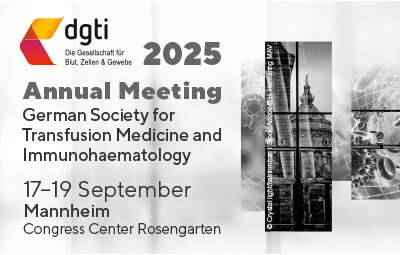
58th Annual DGTI Meeting
9/17/2025 - 9/19/2025
Location:
Manheim, Germany 

EHA 2025 Congress
6/12/2025 - 6/15/2025
Location: 
Milan, Italy  

Webinar: Advanced course on Thrombosis and cancer. (Thrombosis prevention and cancer: Risk stratificationfor optimzed decision? Primary Thromboprophylaxis: need for action? CAT treatment: Challenges in Practice?) : September 2025 

EMLTD Congress

ICT 2025

29th International Congress on Thrombosis
11/6/2025 -11/8/2025 
Location: Porto, Portugal 

Website
Abstracts

Thank you for reading!

We hope you found this newsletter informative. Stay safe, stay active, and stay informed. Together, we can raise awareness about thrombosis and make a difference in the lives of those affected by it.

EMLTD

emltdsecretariat@bcocongresos.com

Privacy policy

View online